We have a system in our body which is versatile, specific and is capable of protecting us against any invading foreign body- be it microorganism or cancerous cells. It is called as This defense system is called Immune System.
Macrophages are part of innate immunity. Macrophages act by endocytosis of the pathogen and then combining the engulfed pathogen with lysosome which is a sac like structure filled with lysozyme and other many other hydrolytic enzyme that help in digestion of the engulfed particle. Macrophages activity is enhanced by cytokines secreted by T-helper cells, by the components of bacterial cell wall. Interferon gamma secreted by T-helper cells is considered to be the most potent activator of macrophages. Activated macrophage has greater phagocytic ability and also kill up cells infected by pathogens. Mycobacterium tuberculosis is one organism that can survive within our macrophages. Once it is inhaled it enters our lungs and alveolar macrophages engulf it by interaction between the macrophage cell membrane and its pathogen membrane.
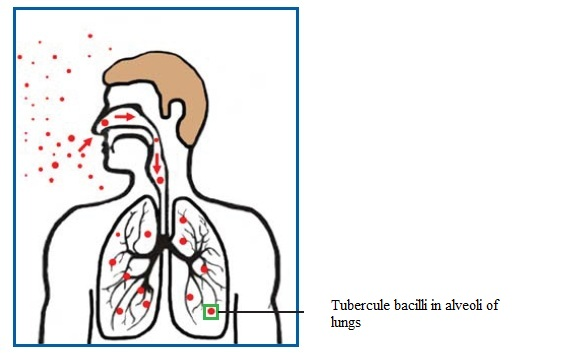 Image no.I: taken from [2](p 26) Once M.tuberculosis is inhaled it enters our lungs and alveolar macrophages engulf it by interaction between the macrophage cell membrane and its pathogen membrane. With a view towards energy efficiency, macrophages are not normally activated to full antimicrobial function upon the initial contact with pathogen and this has dire consequences in the case of mycobacterial infection[1]. This is because the macrophage must be activated to its full extent by cytokines and other activators to effectively destroy this bacterium. 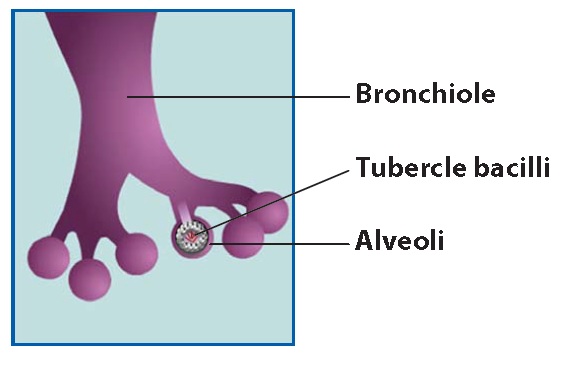 Image no.II: taken from [2](p 26) This bacterium invades macrophages and the normal pathway leading to the destruction of ingested pathogen is altered somehow and mycobacterial phagosome does not fuse with lysosomes[1].But then when TH cells secrete interferon gamma, which is a potent activator of macrophages, which makes the phagosome fuses with lysosome and most of the bacterium is killed. 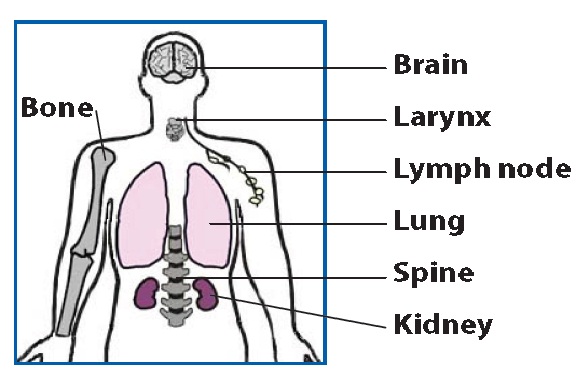 Image no.III: taken from [2](p 27) Surviving bacteria multiply and start entering the blood stream and go to different body parts such as brain, larynx, lymph nodes, lung, spine, kidney were they can multiply. 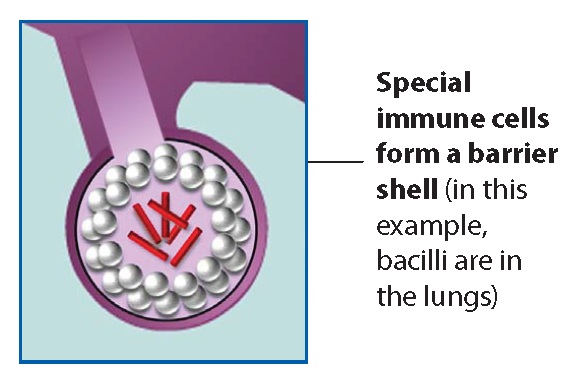 Image no.IV: taken from [2](p 27) These cells are believed to enter a period of non replicating persistence in the phagosome until waning host immunity leads to reactivation from the latent state and the onset of disease[3]. When the becterium is in the period of nonreplicating persistence the period is also called as Latent Tuberculosis(see Signs and symptoms) , which is non contagious. Then special immune cells called macrophages engulf and surround the tubercule bacilli forming a barrier shell like structure called granuloma. This keeps the organism in check and tuberculosis under control. This type of granuloma formation can take place anywhere in the body. Latent Tuberculosis is non contagious. the bacilli cannot spread from infected person(see
Signs and symptoms ) to a healthy individual.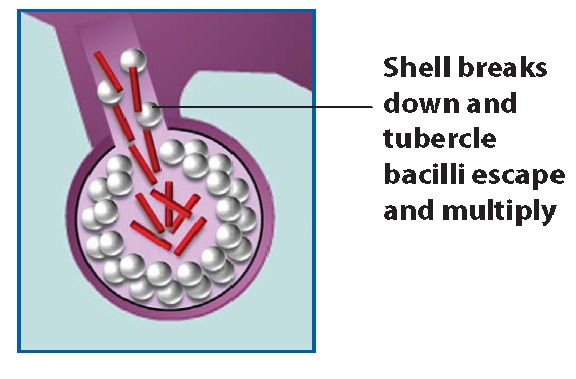 Image no.IV: taken from [2](p 27) When host's immunity wanes, reactivation of the Latent Tuberculosis to Active Tuberculosis(see Signs and symptoms) takes place which the immune cells cannot hold. then the bacilli multiply and they start spreading. This can also happen in lungs or any other organ. Active Tuberculosis is contagious and it spreads from one person to the other. References:
|
||
